

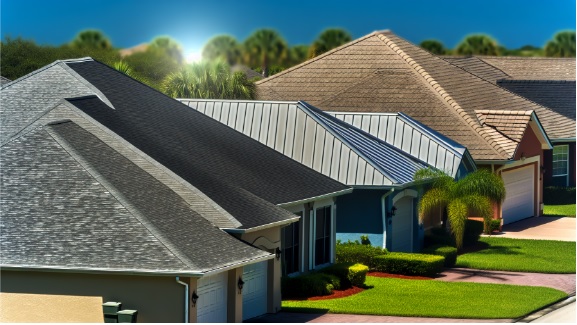
Florida’s climate is unforgiving on roofs, making the choice of material and installation quality critical. From intense UV exposure to hurricanes and heavy rainfall, every factor accelerates wear.
That’s why working with a reliable residential roofing service is just as important as selecting the right roofing system. This guide breaks down seven roofing options that perform well under Florida conditions while balancing durability, cost, and long-term protection.
Asphalt Shingles
Asphalt shingles remain the most widely used option in residential roofing Florida markets. They’re affordable, easy to install, and available in a wide range of colors and styles.
However, they are not built for extreme longevity in Florida’s climate. Heat and UV exposure can shorten their lifespan significantly compared to cooler regions.
- Cost-effective and widely available
- Moderate wind resistance (varies by product rating)
- Typical lifespan: 15–20 years in Florida conditions
They work best for homeowners prioritizing upfront cost over long-term durability.
Metal Roofing
Metal roofing has gained serious traction across Florida, especially in hurricane-prone areas. It reflects solar heat, reduces cooling costs, and holds up well against wind and moisture.
- Lifespan often exceeds 40–50 years
- Excellent wind resistance (often rated for hurricanes)
- Energy-efficient due to reflective properties
The downside is upfront cost. But if you plan to stay in the home long-term, metal usually outperforms cheaper options financially.
Clay Tile Roofing
Clay tiles are common in coastal and Mediterranean-style homes. They offer strong resistance to heat and salt exposure, which makes them suitable for Florida’s environment.
- Naturally insulating
- Highly resistant to UV damage
- Lifespan: 50+ years
The issue is weight. Not every structure can support clay tiles without reinforcement, which adds cost.
Concrete Tile Roofing
Concrete tiles provide a similar aesthetic to clay but at a lower price point. They are widely used by residential roofing company Florida contractors for homeowners who want durability without premium costs.
- Strong and weather-resistant
- More affordable than clay
- Lifespan: 40–50 years
They’re still heavy, so structural considerations remain important.
Flat Roofing Systems (Modified Bitumen / TPO)
Flat and low-slope roofs are common in modern homes and some residential extensions. Materials like TPO and modified bitumen are designed specifically for water resistance and heat reflection.
- Ideal for low-slope designs
- Energy-efficient (especially TPO)
- Easier to maintain and inspect
Poor installation is the biggest risk here. A weak seam or drainage issue can lead to leaks quickly.
Synthetic Roofing Materials
Synthetic shingles and tiles are engineered to mimic natural materials like slate or wood but without the same maintenance issues.
- Lightweight compared to traditional materials
- Resistant to mold, insects, and moisture
- Designed for high-impact and wind resistance
They’re relatively new compared to other systems, so long-term performance depends heavily on manufacturer quality.
Slate Roofing
Slate is one of the most durable roofing materials available, but it’s rarely used in Florida due to cost and structural weight.
- Lifespan: 75–100+ years
- Extremely durable and fire-resistant
- Premium appearance
In Florida, slate is more of a niche choice. It only makes sense for high-end properties with the structural capacity to support it.
Choosing the Right Option
There’s no universal “best” roof in Florida. The right choice depends on budget, home structure, and how long you plan to stay in the property.
- Short-term ownership → Asphalt shingles
- Long-term durability → Metal or tile
- Modern design → Flat roofing systems
- High-end build → Clay or slate
Working with an experienced residential roofing services Florida provider matters more than the material itself. Poor installation will ruin even the best roofing system.
Final Takeaway
Florida roofing isn’t about aesthetics first—it’s about survival under extreme conditions. Materials that perform well elsewhere can fail quickly here if they’re not designed for heat, wind, and moisture.
If you’re evaluating options, focus on lifespan, wind rating, and maintenance—not just price. The wrong decision doesn’t just cost more later—it can fail when you need it most.