

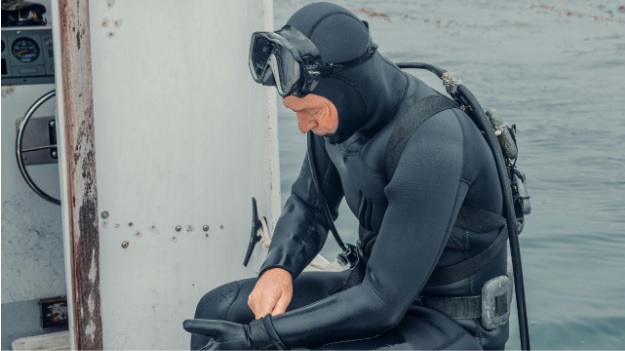
Getting your first scuba certification is not complicated — but most people go into it without a clear picture of what the process actually involves.
This guide walks you through each stage — from theory sessions to your first open water dives in the Gulf of Thailand — so you know exactly what is coming before you descend.
What the Course Actually Consists Of
A Koh Tao open water certification follows the same globally standardised structure as anywhere in the world — four components: theory, confined water work, a water skills assessment, and open water dives. These are not done in strict sequence — most schools mix classroom sessions with pool time across several days so the learning reinforces itself.
The course is performance-based rather than time-based, which means you progress at your own pace. Your instructor’s focus is on helping you become a confident, comfortable diver — not on how long it takes. That is worth knowing before you start, because a lot of first-time divers put unnecessary pressure on themselves to keep up.
Stage One: Theory
The theory section covers physics and diving, equipment, tides, currents, diving procedures, problem management, and the risks of diving. You can generally expect to spend between five and ten hours on it, divided into five chapters.
Most schools now run theory through PADI eLearning — an app-based course you can complete at your own pace before you arrive. If your school offers this option, taking it seriously before your first day saves considerable time and lets you get into the water faster.
Stage Two: Confined Water
Your confined water sessions take place in a pool or in the sea under pool-like conditions, no deeper than five metres. This is where you build confidence, start getting to grips with buoyancy, and work through a range of basic skills — most of which are for safety.
The majority of skills practice focuses on hand signals, mask clearing, regulator recovery, and buoyancy, as well as emergency skills such as out-of-air procedures and controlled emergency swimming ascents.
The confined water stage exists for one reason: so that when you reach open water, none of the practical skills are new. You are not learning them for the first time in the ocean — you are applying what you have already practised.
Stage Three: Open Water Dives
You will complete four qualifying open water dives. The maximum depth for the first two dives is 12 metres; for the second two, it is 18 metres.
The first open water dive is kept intentionally simple. For most people, it is the first time they have worn scuba gear in open water at all. After a controlled descent, you complete a trim check, clear a partially flooded mask, and recover and clear your regulator — then spend the remainder of the dive exploring the site with your instructor.
By the fourth dive, most students are genuinely enjoying being underwater rather than running through a checklist. The shift, from managing skills to actually diving, is what the course is designed to produce.
For anyone completing their open water certification, those four dives take place across some of the Gulf of Thailand’s most accessible and well-regarded sites — warm, clear water with strong visibility and marine life from the first descent.
What You Receive at the End
Once all sections are completed, your certification is processed, and you receive a PADI eCard, accessible via the PADI app. You also have the option to purchase a physical card. Your certification does not expire — though if you go more than six months between dives, a refresher session is recommended before diving again.
The certification is globally recognised. From the day you receive it, you can rent equipment, join guided dive trips, and dive independently with a buddy at dive centres worldwide.
FAQs
Do I need to be a strong swimmer to start an open water course?
You need to be comfortable in the water, not competitive. The water skills assessment requires a 200-metre swim and a 10-minute survival float. There is no time limit on either. If you can complete both at a relaxed pace, you are ready.
What happens if I struggle with a skill in confined water?
It is completely normal to struggle with any new skill. Your instructors are trained for it; you just have to work through it together at whatever pace you need, and your certification is not at risk if it takes an extra session.
What comes after open water certification? The next step is the Advanced Open Water course, which consists of two compulsory adventure dives covering navigation and deep diving, plus three adventure dives of your choice. Most certified divers complete it within the same trip, extending their depth range to 30 metres in the process.