

Sim racing is changing how drivers train for motorsport. With realistic virtual tracks and advanced technology, sim racers are sharpening skills and cutting costs. Discover how this digital revolution, led by the sim racer, is reshaping training and making motorsport more accessible than ever.
Motorsport has always been thrilling but expensive. Traditional training involves real cars, tracks, and fuel, which can cost a fortune. Enter the Sim Racer, a new breed of driver using virtual platforms to hone their skills. Sim racing uses advanced technology to mimic real-world racing, offering a cheaper, safer way to train. This article explores how sim racing is transforming motorsport training, making it more efficient and inclusive.
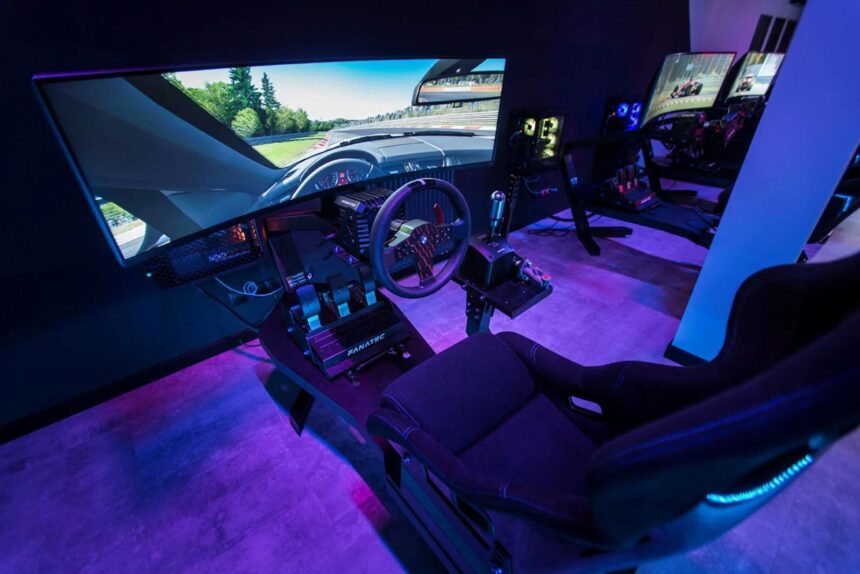
Sim racing involves driving virtual cars on digital tracks using specialised software and hardware. A Sim Racer sits at a rig with a steering wheel, pedals, and a screen or virtual reality headset. The setup feels remarkably close to a real car. Tracks are designed to match real-world circuits, down to every curve and bump. This realism allows drivers to practice without stepping onto a physical track.
The technology behind sim racing is impressive. Software like iRacing or Assetto Corsa offers accurate physics, mimicking how cars handle in real life. Hardware, such as force-feedback wheels, adds realism by simulating resistance and vibrations. These tools create an immersive experience, letting drivers practice strategies and improve reaction times safely.
Why Sim Racing Is Revolutionising Training
Sim racing is changing motorsport training in several key ways. It offers benefits that traditional methods can’t match, from cost savings to accessibility. Here’s how it’s making an impact:
- Cost-Effective Practice: Real-world racing is pricey. Fuel, tyres, and track fees add up quickly. Sim racing cuts these costs, letting drivers practice for hours at a fraction of the price.
- Safe Learning Environment: Mistakes on a real track can lead to crashes or injuries. In sim racing, drivers can push limits without risking harm.
- Endless Track Access: Physical tracks aren’t always available. Sim racing offers unlimited access to virtual circuits, day or night.
- Customisable Scenarios: Drivers can adjust weather, car setups, or track conditions to simulate specific challenges, preparing them for real races.
These advantages make sim racing a game-changer. Drivers can train more often, experiment freely, and build confidence without the high stakes of real-world racing.
Building Skills Through Sim Racing
Sim racing isn’t just about driving in circles. It sharpens critical skills that translate directly to real tracks. For instance, drivers learn to read corners, manage tyre wear, and perfect braking points. The virtual environment forces them to think strategically, just like in a real race.
Reaction times improve as drivers face unpredictable scenarios, like sudden overtakes or changing weather. Muscle memory develops through repetitive practice, embedding techniques that become second nature. Teamwork skills grow, as many sim racing platforms include multiplayer modes where drivers compete or collaborate.
The realism of sim racing means these skills transfer seamlessly to real cars. A Sim Racer can step into a physical vehicle and feel familiar with the track, having already “driven” it countless times virtually. This preparation boosts confidence and performance.
Accessibility for Aspiring Drivers
One of the most significant barriers in motorsport is access. Not everyone can afford a racecar or track time. Sim racing breaks this barrier. A decent sim racing setup costs far less than a real car, and many platforms are available on regular gaming consoles or PCs. This opens the door for aspiring drivers from all backgrounds.
Sim racing also connects people globally. Online communities and competitions let drivers race against others worldwide, gaining experience and exposure. Talented sim racers can catch the eye of real-world teams, turning virtual success into professional opportunities. This democratisation of training is making motorsport more inclusive than ever.
The Role of Technology in Sim Racing’s Growth
Technology drives sim racing’s revolution. Advanced software creates hyper-realistic environments, while hardware like motion rigs mimics a car’s movements. Virtual reality headsets add another layer, immersing drivers in a 360-degree racing world. These tools make training feel authentic, bridging the gap between virtual and real.
Data analytics also play a role. Sim racing software tracks performance metrics, like lap times or braking accuracy, giving drivers instant feedback. They can analyse mistakes, tweak strategies, and improve faster than in traditional training. This data-driven approach mirrors professional motorsport, where precision is everything.
Challenges and Limitations
Sim racing isn’t perfect. While it mimics real-world conditions well, it can’t fully replicate the physical demands of driving a real car. G-forces, heat, and the adrenaline of a live race are hard to simulate. Some argue this limits its effectiveness for top-tier drivers who need to feel the car’s weight and speed.
There’s also the risk of over-reliance. Spending too much time in a virtual world might make drivers less prepared for real-world unpredictability, like mechanical failures or crowd pressure. Still, these challenges don’t outweigh the benefits. Sim racing complements, rather than replaces, traditional training.
The Future of Sim Racing in Motorsport
The future looks bright for sim racing. As technology advances, virtual environments will become even more realistic. Artificial intelligence could create more intelligent opponents, while better hardware might simulate physical sensations like G-forces. These improvements will make sim racing an even more powerful training tool.
Motorsport teams are already embracing sim racing. Many use it to scout talent, train drivers, and test strategies. As costs continue to drop, more teams and individuals will adopt it. The line between virtual and real racing is blurring, with the sim racer at the heart of this shift.
Closing Remarks
Sim racing is transforming how drivers prepare for motorsport. It offers a cost-effective, safe, and accessible way to build skills and gain experience. By leveraging cutting-edge technology, sim racers are pushing the boundaries of what’s possible in training. As the sport grows, platforms like Proper News Time show how the Sim Racer is leading a revolution, making motorsport more inclusive and innovative than ever before.