

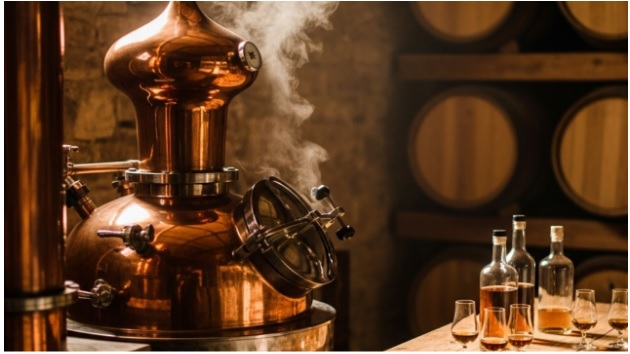
Ever wondered why some spirits have that perfect balance of aroma, smoothness, and flavor that lingers with every sip? In alcoholic beverage development, it often comes down to one thing—distillation. This key step in spirit-making refines the alcohol, captures the best flavors, and shapes the drink’s unique character.
The challenge is that when distillation isn’t handled with care, it can lead to:
- Harsh or unbalanced taste
- Loss of delicate aromas
- Inconsistent quality from batch to batch
Here, we’ll explore how distillation works, the choices that influence flavor and quality, and why getting it right is essential for crafting great spirits.
Choice of Raw Ingredients
The distillation process begins long before the still is fired up—its foundation lies in the choice of raw ingredients. The sugars in grains, fruits, or vegetables used during fermentation don’t just create alcohol; they influence the spirit’s character in ways that are carried through distillation.
For example, whiskey made from barley often carries rich, malty, and sometimes nutty notes. Corn-based whiskey, such as bourbon, leans toward a sweeter, fuller-bodied profile, while rye-based spirits can be spicier and more robust. In contrast, rum, which is derived from sugarcane or molasses, often develops caramelized sweetness and tropical undertones. Even subtle differences, such as the variety of grape used for brandy or the type of agave for tequila, can result in distinctive flavor profiles after distillation.
The key is that the raw ingredient shapes the base character, and distillation refines and concentrates those qualities. A skilled distiller understands how to preserve the best elements of these ingredients while removing harsh or undesirable notes.
Type of Still
The equipment used for distillation is another critical factor influencing flavor and quality. The two main types of stills—pot stills and column stills—operate differently and produce markedly different results.
Pot stills are batch distillation systems that tend to produce richer, more robust spirits. They allow more congeners (flavor compounds) from the fermentation to carry over into the distillate, resulting in complex, layered flavors. This is why pot stills are often favored for products like single malt Scotch whisky, cognac, and certain artisanal rums. Each batch can vary slightly, which adds to the uniqueness of the spirit.
Column stills (also called continuous stills) are designed for efficiency and high purity. They operate continuously and can strip out most congeners, producing lighter, cleaner spirits. This method is ideal for neutral spirits like vodka, light rums, or certain gins where a delicate or neutral flavor is desired.
The choice of still is a strategic decision—producers must decide whether they want to highlight complexity and richness or aim for smoothness and purity.
Number of Distillations
The number of times a spirit is distilled can dramatically affect both flavor and texture.
Vodka is a prime example of a product that is often distilled multiple times—sometimes as many as five or more—to achieve exceptional purity and a neutral flavor profile. This removes most of the natural flavors from the base ingredients, making vodka ideal for cocktails where other ingredients should shine.
On the other hand, spirits like whiskey or certain rums might only be distilled once or twice to preserve the character of the raw materials and fermentation process. Over-distilling these spirits can strip away the very flavors that make them unique.
Finding the right balance is essential. Too few distillations may leave unwanted harshness, while too many can make the spirit bland and lifeless.
Temperature Control
Temperature management during distillation is both a science and an art. Precision heating allows distillers to separate different fractions of the spirit—known as the “heads,” “hearts,” and “tails.”
- Heads contain volatile compounds that boil off early, including some that can be unpleasant or even harmful. These are usually discarded.
- Hearts are the desirable middle cut, containing the purest alcohol and the best balance of flavor and aroma. This is what will become the final product.
- Tails are heavier compounds that boil later and can add unwanted bitterness or heaviness.
By controlling the temperature carefully, distillers can ensure they capture the best possible heart cut. For example, maintaining slightly lower temperatures may help preserve delicate floral or fruity notes, while slightly higher temperatures might encourage richer, deeper flavors.
Inconsistent temperature control can result in off-flavors, harshness, or a lack of balance. Skilled distillers monitor and adjust heat continuously to produce a spirit that is smooth, flavorful, and true to its intended style.
Conclusion
Distillation is more than a step in spirit-making—it’s the craft that defines aroma, flavor, and smoothness. From ingredient choice to precise temperature control, every decision shapes the final product. When mastered, distillation transforms a simple fermented liquid into a distinctive, high-quality spirit that stands out, delights the senses, and earns lasting loyalty from discerning drinkers.